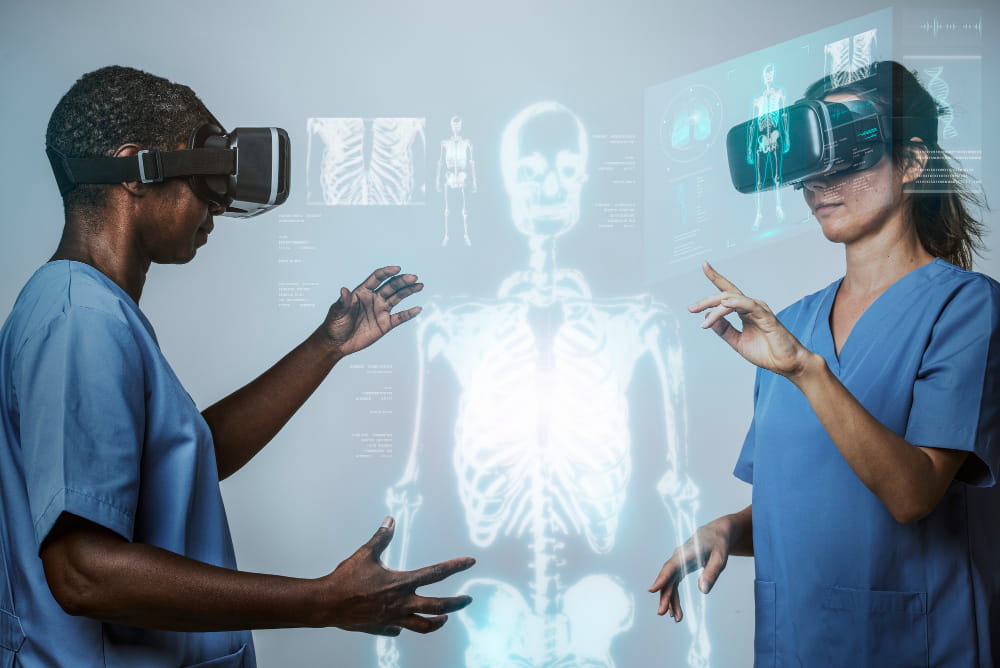
Picture a patient in a remote village meeting their doctor face-to-face, not over a shaky video feed, but in a 3D virtual clinic where gestures, expressions, and interactions feel surprisingly real. It may sound like science fiction, yet this scenario is gradually becoming reality, thanks to the metaverse.
The COVID-19 pandemic accelerated digital transformation in healthcare, prompting professionals, patients, and technology innovators to rethink how care is delivered. The metaverse, a convergence of virtual reality (VR), augmented reality (AR), artificial intelligence (AI), and other immersive technologies, is showing promise as a practical means to reshape healthcare experiences and outcomes globally.
From Telehealth to Immersive Care
The sudden boom in telehealth revealed important shortcomings: limited engagement, lack of deep connection, and uneven access. While video consultations solved logistical problems, they rarely matched the nuance and empathy of in-person care. The metaverse offers a way to bridge that gap, creating immersive, multisensory environments that make patients feel genuinely connected to their providers.
This is not just about convenience. The metaverse has potential to enhance medical training, expand mental health therapy options, and bring advanced care to underserved communities. Of course, how these technologies are deployed in practice will determine whether these benefits materialize.
Understanding the Metaverse in Healthcare
In simple terms, the metaverse is a network of virtual spaces where users interact through avatars. VR provides fully immersive environments, AR overlays digital content onto the real world, and mixed reality (MR) combines both. AI underpins these technologies, enabling real-time feedback, intelligent simulations, and personalized experiences.
When thoughtfully applied to healthcare, these tools do more than digitize interactions, they make them more meaningful. Digital twins, for instance, replicate organs or entire patients, allowing clinicians to rehearse surgeries or tailor treatments without risk. Immersive therapy sessions engage patients more fully, and interactive education tools help them understand complex medical concepts.
At its core, the metaverse lowers both physical and psychological barriers, making healthcare more inclusive and accessible, though it’s important to remember that adoption will vary across regions and systems.
Why the Metaverse Matters for Healthcare Innovation
The potential of the metaverse is multifaceted:
Patient engagement: Immersive environments transform patients from passive recipients into active participants. Understanding treatment plans, tracking progress, and staying motivated becomes easier when healthcare feels interactive.
Access to care: Geographic distance often limits access, particularly in rural or underserved areas. Virtual clinics and remote consultations in the metaverse can reduce these barriers, though their effectiveness still depends on digital infrastructure and connectivity.
Medical education and surgical training: VR and AR allow professionals to practice complex procedures repeatedly in risk-free virtual settings. In many cases, this leads to faster learning, safer surgeries, and greater confidence among clinicians.
Breaking Barriers with Virtual Clinics
XRHealth provides a clear example of metaverse-enabled telemedicine. Their platform allows therapists and clinicians to guide patients through exercises in immersive environments, with real-time feedback that improves adherence and outcomes. For those with chronic conditions or mobility limitations, this reduces travel burdens significantly.
Apollo Hospitals in India has taken a similar approach, collaborating with the startup 8chili to build VR environments for patient education and engagement. These initiatives demonstrate that healthcare providers are increasingly blending physical and digital care, creating services that are both scalable and personalized.
Reimagining Medical Training and Surgical Practice
The metaverse is transforming medical education and professional training. In 2023, Osso VR reported that students trained on its VR surgical platform outperformed peers using conventional methods, performing orthopedic procedures more quickly and accurately. Platforms like Apple Vision Pro further enhance spatial computing, creating realistic practice environments where mistakes carry no real-world consequences.
Microsoft HoloLens provides another layer of innovation. Surgeons can overlay diagnostic images and patient data directly in their field of vision, improving precision and efficiency. In effect, the metaverse serves as a bridge between human expertise and digital intelligence, although full integration will likely take time across institutions.
Patient-Centered Innovations in Mental Health and Pain Management
Mental health care is emerging as a particularly promising application for the metaverse. Traditional therapy often struggles with engagement, accessibility, and stigma. AppliedVR has developed FDA-approved VR modules for treating anxiety, PTSD, and chronic pain. By immersing patients in calming or supportive virtual environments, these therapies can reduce medication reliance and improve outcomes.
Clinical collaborations with companies like Merck & Co. have shown that immersive VR can lower hospital patient anxiety by around 30%, highlighting the tangible benefits of these solutions. It’s worth noting, however, that patient response may vary, and technology is best used as a complement rather than a replacement for human care.
Real-World Examples in Action
Several organizations are actively experimenting with the metaverse to improve care:
- Apollo Hospitals Group uses VR to educate patients on heart health, engaging them emotionally to encourage lifestyle changes.
- EchoPixel allows surgeons to virtually explore 3D models of patient anatomy for preoperative planning.
- Intuitive Surgical integrates metaverse tools into robotic surgery platforms, enhancing visualization and control for minimally invasive procedures.
These cases illustrate how immersive technology can transform both patient care and professional training, moving from theory to measurable practice.
Challenges and Ethical Considerations
Despite its promise, the healthcare metaverse faces notable hurdles. Data privacy and cybersecurity are crucial, given the vast amounts of sensitive patient information these platforms generate. Regulatory frameworks are evolving but must carefully balance innovation with patient safety.
Adoption barriers remain, including clinician hesitancy, infrastructural limitations, and disparities in digital literacy. Equitable access is therefore both a moral and practical concern.
Ethical considerations also demand attention. Technology should augment, not replace, the human dimension of care. Respecting patient autonomy, informed consent, and emotional wellbeing is essential as healthcare increasingly moves into virtual spaces.
The Future of Healthcare in the Metaverse
Looking forward, the metaverse will likely become more intelligent, secure, and personalized. Explainable AI, blockchain for secure data management, and expanded digital twin applications will deepen its integration into healthcare. Predictive analytics could shift focus from reactive treatment to preventive medicine, potentially reshaping public health strategies.
Market projections suggest the global healthcare metaverse could reach hundreds of billions of dollars by 2035. Yet the impact extends beyond economics, it lies in improving access, system efficiency, and patient outcomes. Healthcare organizations and innovators will need to invest in digital literacy, collaborative solutions, and patient-centered virtual experiences. This evolution represents a shift from episodic treatment toward a continuous, immersive model of care.
Conclusion: A New Era of Human-Centered Care
The healthcare metaverse is not merely a technological upgrade; it represents a fundamental rethinking of how care is delivered. It places empathy, engagement, and accessibility at the center of healthcare practice.
As the boundary between physical and virtual worlds continues to blur, patients and professionals alike can anticipate more personalized, precise, and inclusive healthcare. Learning occurs in realistic virtual simulations, care is accessible regardless of location, and therapy addresses both mind and body in innovative ways.
The question is no longer whether this future will arrive, but how prepared the healthcare system is to embrace it responsibly. The metaverse encourages us to redefine healthcare as a human-centered experience, combining technological innovation with meaningful connection.