
Race day is the wrong time to discover that a waistband rubs, a shirt becomes rough when wet or a sports bra moves over long distances. Every item should be tested during training, including your best anti chafe running protection. A few minutes of preparation before the start can prevent skin irritation from affecting pacing and concentration later.
Whether you are running a 10K, half marathon, marathon or ultra, race-day skin care should be simple, familiar and thorough.
Why Race Day Creates Extra Risk
Races often differ from normal training. You may start earlier, wait in a holding area, wear a race number, carry more nutrition or run at a different pace.
Risk factors include:
- Longer distance than ordinary training
- Crowded starts
- Additional layers
- Race-number fastenings
- Hydration belts or vests
- Warm weather
- Rain
- Increased sweating
- New event merchandise
- Travel and disrupted routines
- Pre-race nerves causing rushed preparation
The atmosphere can also distract you from an early hotspot. Once the race begins, stopping to adjust kit may feel inconvenient.
Create a Race-Day Hotspot Map
List every area that has caused discomfort during training.
Inner Thighs
Protect beyond the exact previous irritation because shorts may shift during the race.
Chest and Nipples
Consider the fabric, race-number placement and expected weather.
Underarms
Check both skin-on-skin contact and the edges of your running top.
Bra Line
Apply carefully around established friction points and confirm that the garment remains secure.
Waist
Review how shorts, tights, belts and vests overlap.
Feet
Use tested socks and protect known shoe-contact areas.
Neck and Shoulders
Check hydration packs, clothing collars and rain jackets.
This map should be prepared before race morning.
The Night-Before Checklist
Avoid making unnecessary changes.
Prepare:
- Tested race clothing
- Familiar socks
- Broken-in shoes
- Race belt or number fasteners
- Hydration equipment
- Anti-chafe protection
- Spare clothing
- Post-race footwear
- A small bag for wet kit
Inspect seams and labels. Confirm that the anti-chafe product is not nearly empty.
How to Apply Protection on Race Morning
Use an anti chafing cream for runners before putting on fitted race clothing.
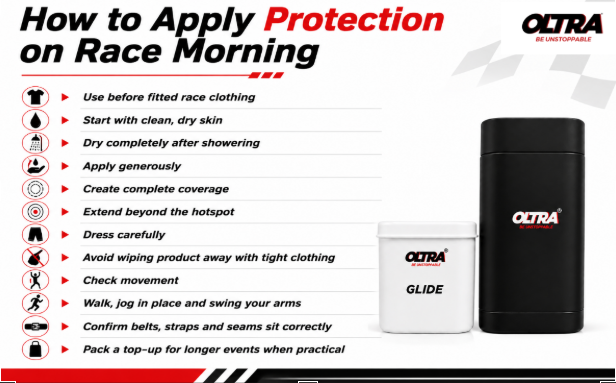
Start with Clean, Dry Skin
Moisture can make application less controlled. Dry the body completely after showering.
Apply Generously
Use enough product to create complete coverage. Race morning is not the time to conserve a small amount.
Extend Beyond the Hotspot
Clothes move during running. Protect the surrounding skin as well as the exact previous problem area.
Dress Carefully
Avoid wiping the product away while pulling on tight clothing.
Check Movement
Walk, jog in place and swing your arms. Confirm that belts, straps and seams sit correctly.
Pack a Top-Up
Carry a compact product for longer events when practical.
Protection by Race Distance
5K and 10K
Known hotspots still require attention, particularly in hot or wet conditions. Apply protection even when the race is shorter than your usual long run.
Half Marathon
The combination of pace and duration can expose clothing problems. Use the same preparation practised during training.
Marathon
Cover every established hotspot and consider mid-race reapplication. Do not assume one problem area is the only risk.
Ultramarathon
Plan skin care as part of the aid-station strategy. Pack spare socks, dry clothing and a portable product. Check the feet and equipment contact zones regularly.
What to Do at the First Sign of Friction
Do not wait until discomfort becomes severe.
When possible:
- Slow down or stop briefly.
- Identify the rubbing item.
- Smooth or reposition the clothing.
- Adjust the strap or belt.
- Dry excessive moisture.
- Reapply protection.
- Replace wet socks or clothing at an aid station.
- Decide whether continuing will worsen broken skin.
A short adjustment can protect the rest of the race.
Weather-Specific Race Planning
Hot Weather
Apply protection thoroughly and choose moisture-managing clothing. Carry a top-up if you sweat heavily.
Rain
Wet clothing can cling and move differently. Wear a tested rain layer and protect beneath straps and waistbands.
Cold Weather
Additional layers create more seams. Test the complete layered outfit rather than only the base layer.
Changeable Conditions
Trail and ultra events may include several weather patterns. Pack suitable spare kit and plan opportunities to inspect hotspots.
Why Oltra Glide Is Suitable for Race Preparation
Oltra Glide is a refillable, direct-application anti-chafe balm designed for active movement. Runners can apply it to common race-day friction zones including the thighs, chest, nipples, underarms, feet, groin, neck, bra line and waist.
The Oltra Glide Starter Pack contains a reusable applicator and one 40g refill. The stick-style format allows controlled application without needing to spread a cream with the fingers. This can be useful in busy race facilities or at aid stations.
Oltra describes the balm as plant-based certified, vegan, cruelty-free, made in Britain and free from aluminium, parabens and petroleum. Four unisex scent profiles are available, including the fragrance-free Core option.
The replaceable refill system also allows regular runners to retain the applicator between training blocks and races.
Post-Race Skin Care
Change out of wet clothing as soon as practical. Clean sweat and salt from the skin gently and pat dry.
Inspect:
- Thighs
- Feet
- Chest
- Underarms
- Waist
- Bra line
- Neck and shoulders
Do not scrub irritated areas. Wear loose clothing and avoid further friction. Seek medical advice for severe pain, spreading redness, discharge, increasing warmth or irritation that does not improve.
Make Protection Part of the Race Plan
The best cream for chafing is one that has already worked during training in similar clothing and conditions. Race day should be a repeat of a successful routine, not an opportunity for experimentation.
Final Thoughts
Race performance depends on managing many small details. Skin protection is easy to overlook, but painful chafing can become difficult to ignore once it begins.
Prepare your hotspots, use familiar clothing and apply protection before the start. A tested routine allows you to focus on pacing, nutrition, atmosphere and reaching the finish line.